
Responsible delivery: why the right supply chain matters
By Danielle Bennett, ESG Manager.
One of the most valuable parts of our B Corp™ journey has been the opportunity to look at sustainability not as a collection of individual initiatives, but as something that should influence the way we deliver projects every day.
For DBSJ, that has meant taking a closer look at our supply chain, our subcontractors, the materials coming onto our sites and the environmental impact of the work taking place around us.
Construction is a collaborative industry. A project can have the best environmental ambitions in the world, but achieving them depends on everyone involved understanding those ambitions and taking responsibility for their part in delivering them.
That’s why responsible subcontractor selection and procurement are so important to us.
Choosing partners, not just suppliers
We want to work with suppliers and subcontractors who share our values and our sustainability goals. That starts with how we select them, but it doesn’t end there. We integrate relevant business and sustainability requirements into our sub-contracts and provide support to suppliers to help them meet those requirements.
We’ve also worked towards creating standardised goals for our supply chain so that strategic performance can be measured more consistently. This is important because responsible procurement isn’t simply about asking whether something is the cheapest option.
We look at procurement from a whole-life cost perspective and have a preference for ethical and certified products where appropriate. It’s about considering the wider value and impact of the decision.
Making sustainable procurement visible on site
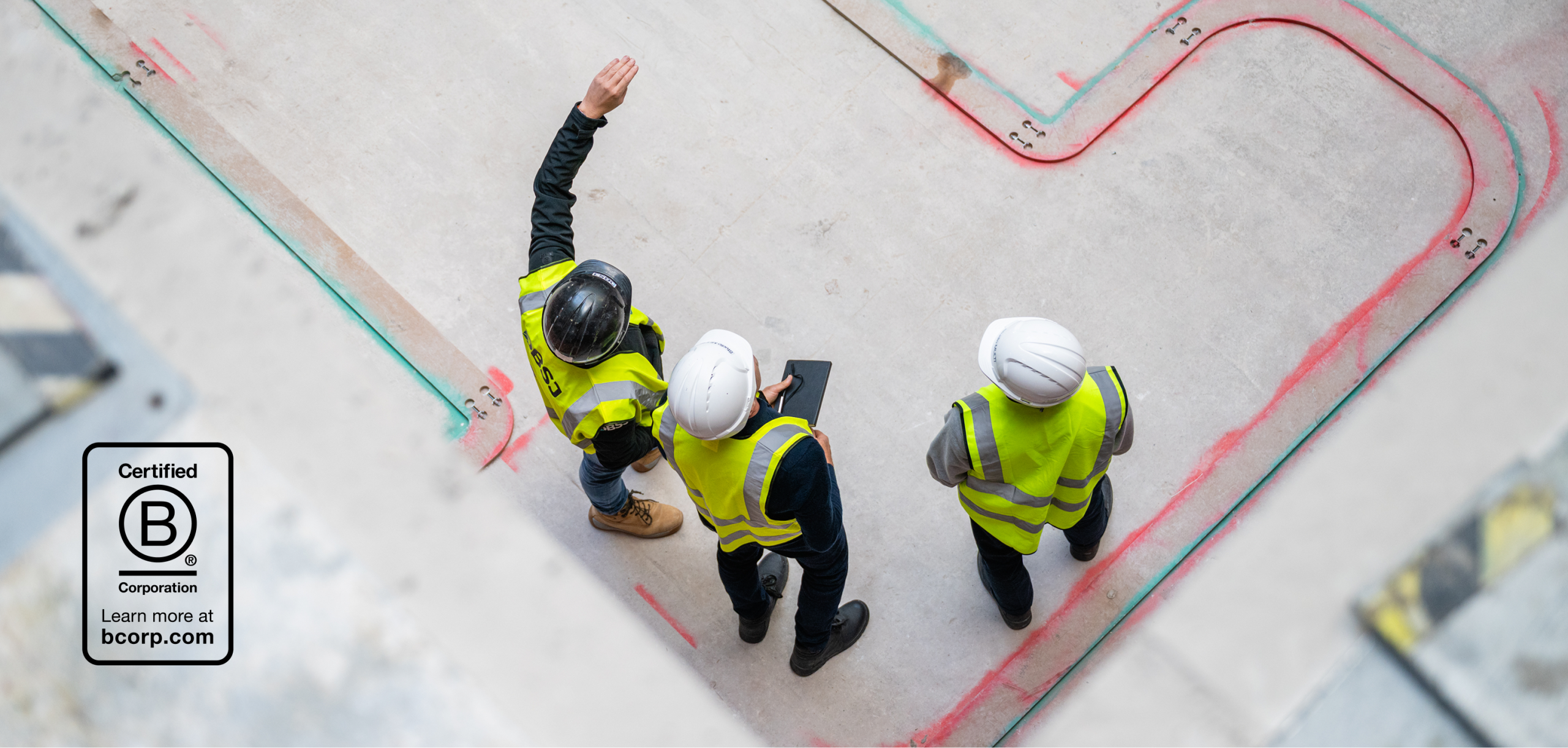
Once materials arrive on site, we need to know that the decisions made during procurement are being reflected in delivery.
All materials brought to site for installation are checked by the Project Sustainability Advisor to ensure their credentials meet the requirements established through the project’s sustainability aims, objectives and targets.
The materials and their sustainability credentials are then recorded on a project materials database alongside the relevant certifications. This gives the project team a clear record of what has been procured and enables us to track performance against agreed sustainable procurement targets.
For clients, that level of visibility matters. It means sustainability requirements can be translated into practical processes and monitored rather than simply appearing as aspirations in a project plan.
Making environmental management a shared responsibility
Our ISO 14001 Environmental Management System provides an important framework for managing environmental performance.
Regular inspections are carried out throughout the duration of a project, with the results shared with subcontractors. We see this as an opportunity to encourage active engagement rather than simply checking compliance.
The culture we want is one where environmental responsibility is understood across the project team. That includes making sure our people have the appropriate information, instruction, supervision and training for their roles. Environmental toolbox talks help keep those conversations active on site.
We also maintain systems designed to prevent pollution and minimise environmental harm, while internal site audits and transparent reporting help us identify areas where we can improve.
And importantly, we continue to review and monitor our energy, waste and water consumption as part of maintaining our ISO 14001 certification.
Rethinking what happens to project waste
Waste is another area where the decisions made early in a project can make a significant difference.
Our first priority is to reduce waste at source through efficient design and production methods. Where materials are left over, we look for opportunities to reuse or repurpose them within our operations, or donate them for reuse elsewhere.
Recyclable materials are carefully sorted and processed, and we deliberately seek to avoid sending non-recyclable waste to landfill wherever possible. Our internal monitoring and reporting tracker allows us to keep track of our performance and identify opportunities for improvement.
We’ve also formed an alliance with East Kent Recycling, a local provider operating with a zero-to-landfill policy. Working with a local organisation that shares our values supports our move towards more circular waste solutions.
Looking beyond the certification
Becoming a B Corp™ Certified company has given us a useful framework for measuring ourselves against a broader set of responsibilities, but I don’t see certification as the finish line.
If anything, it has made us more conscious of the areas where we can continue to improve.
For DBSJ, that means continuing to raise expectations across our supply chain, develop innovative solutions with our suppliers and subcontractors, and share best practice where we can.
It also means continuing to challenge ourselves on the fundamentals: what we buy, who we work with, how we manage sites and what happens to materials once they have served their immediate purpose. The ultimate test is whether these processes create better outcomes for the projects we deliver and the clients we work with.
Responsible construction should mean more than completing a project successfully. It should mean doing so in a way that considers the environmental impact, supports better supply-chain practices and creates long-term value.
That’s what we’re continuing to work towards.