B Corp™ in action: How we’re putting responsible delivery into practice
Monday, 29th September 2026

Our B Corp™ Certification gives us a framework for continually improving how DBSJ operates and the impact we have on people and the planet. But what does that mean in practice?
From reducing project waste and managing environmental impact to protecting our people, developing skills and supporting clients’ sustainability goals, responsible delivery is becoming increasingly embedded in how we work.
Reducing project waste and increasing reuse
The fit out sector inevitably uses significant quantities of materials, making waste management one of the areas where contractors can have meaningful influence.
Our first priority is reducing waste at source. Efficient design, accurate procurement, considered manufacturing and careful project planning all help prevent unnecessary materials being ordered or discarded in the first place.
Our partnership with East Kent Recycling supports this approach. Working with a local waste management provider operating with a zero-to-landfill policy helps us develop more circular waste solutions and improve visibility over what happens to materials leaving our projects and facilities. DBSJ already works with East Kent Recycling as part of its commitment to zero waste to landfill.
Waste performance is also monitored internally, helping us identify patterns, measure progress and highlight opportunities for further improvement.
Environmental management on site
Good environmental intentions need robust project management behind them.
Our ISO 14001 Environmental Management System provides an established framework through which we identify environmental impacts, set objectives, monitor performance and continually review our approach. On individual projects this means creating a positive environmental culture that extends from our own project team through to subcontractors and suppliers.
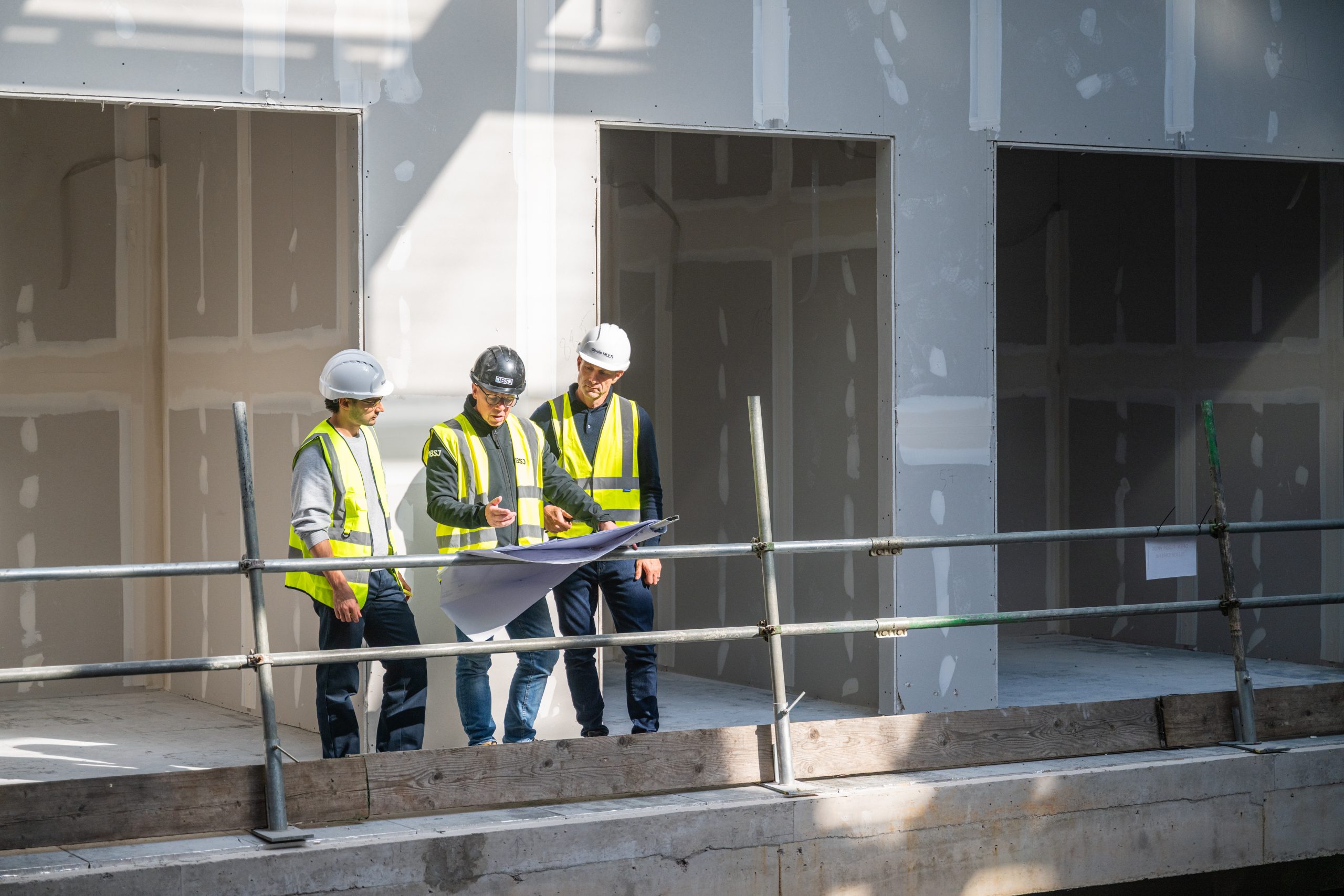
Regular environmental inspections are undertaken during delivery, with findings shared with relevant subcontractors to encourage engagement and corrective action where required.
Our approach includes:
- Identifying and assessing environmental impacts associated with our activities
- Providing relevant environmental information, instruction, supervision and training
- Using environmental toolbox talks to reinforce responsibilities on site
- Monitoring waste, energy and water consumption where applicable
- Maintaining systems designed to prevent pollution and minimise environmental harm
- Carrying out internal site audits and inspections
- Recording performance to support informed decision-making
- Acting on identified opportunities for improvement
- Reviewing our Environmental Management System to maintain its effectiveness
It turns environmental management from an aspiration into an operational discipline.