
Beyond B Corp™: Turning DBSJ’s sustainability commitments into action
By Danielle Bennett, ESG Manager.
There’s a difference between saying you want to operate more responsibly and being able to demonstrate that you’re doing it.
For me, that’s one of the most important lessons from our B Corp journey.
B Corp CertificationTM gives us a framework for looking at our environmental and social impact, understanding our responsibilities and identifying where we can improve. But the real value comes from what we do afterwards.
At DBSJ, we’re looking ahead to the next three years with a clear principle in mind: our goals need to be meaningful, measurable and achievable.
I don’t want us to make commitments simply because they sound good. We need to understand what we’re trying to change, what it will take to get there and how we’ll know whether we’ve succeeded.
That means being ambitious enough to make progress, but realistic enough to deliver it.
Making environmental management part of project delivery
Construction projects involve many different people, businesses and activities. Environmental performance depends on how well all of those elements work together.
Our ISO 14001 Environmental Management System provides an important structure for managing our environmental responsibilities. It supports regular reviews, helps us monitor performance and gives us a framework for identifying areas where we can improve.
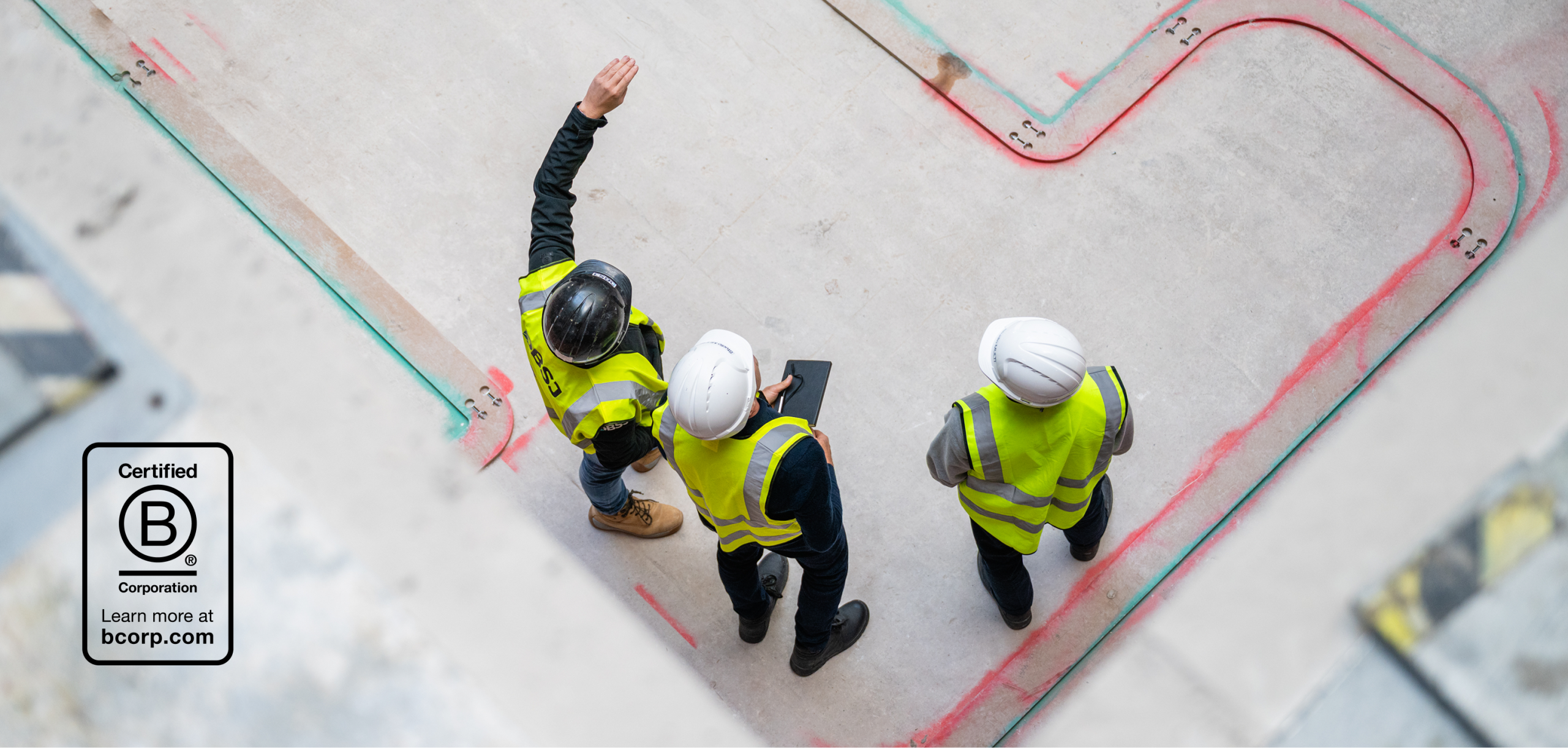
On site, this includes regular environmental inspections, with findings shared with subcontractors to encourage active engagement in sustainable site management.
We also use environmental toolbox talks and role-appropriate training to help people understand their environmental responsibilities. The aim is to create a shared environmental culture in which everyone recognises the part they play.
These processes matter because environmental management cannot sit with one individual or department. It needs to be reflected in everyday decisions, from how materials are handled to how waste is managed and pollution is prevented.
Looking ahead, we want to keep building on this foundation and ensure our processes continue to translate into practical improvements.
Working with our supply chain
Our responsibilities also extend beyond our own teams.
The suppliers and subcontractors we work with influence the materials used, the way projects are delivered and the environmental outcomes we can achieve.
We aim to select partners who share our values and sustainability goals. Relevant requirements are incorporated into sub-contracts, and we work to support suppliers in meeting those expectations.
We also use a project materials database to record the sustainability credentials and relevant certifications of materials brought to site for installation. These are checked by the project Sustainability Advisor against the agreed sustainability aims, objectives and targets.
This gives us a more consistent way to track procurement and assess compliance with the requirements established for each project.
It’s an approach that helps turn broad sustainability ambitions into something practical. Rather than relying on statements about responsible sourcing, we have processes that allow us to check and record what is happening.
There is still scope to learn and improve, particularly through closer collaboration with our supply chain. Developing innovative solutions with suppliers and subcontractors, and sharing best practice across the sector, will remain important as we move forward.
Looking at waste differently
Waste reduction is another area where the principle of measurable progress is essential.
Our priority is to reduce waste at source through efficient design and production methods. We then look for opportunities to reuse or repurpose surplus materials, donate them for further use and ensure recyclable waste is appropriately sorted and processed.
We deliberately seek to avoid landfill wherever possible.
Our internal monitoring and reporting tracker helps us understand our performance, while our alliance with East Kent Recycling supports our work towards more circular waste solutions. As a local provider operating with a zero-to-landfill policy, they share our ambition to manage waste more responsibly.
The next step is to continue reviewing what our monitoring tells us and use that information to guide practical improvements.
It’s not enough to have a waste management process in place. We need to keep asking whether it is working as effectively as it could and where we can make further progress.
Our people matter just as much
When we talk about sustainability, environmental performance often receives the most attention. But responsible business is also about the people who make the work possible.
Our B Corp journey has reinforced the importance of looking at these responsibilities together.
Health, safety, wellbeing, training and the wider employee experience all deserve the same thoughtful approach as our environmental commitments. We need to understand what our people need, identify opportunities to improve and make sure the goals we set can be delivered in practice.
For me, this is where being realistic becomes particularly important.
We should be willing to challenge ourselves, but we also need to make sure our objectives are supported by the right resources, systems and engagement. A goal is only useful if we have a credible plan for achieving it.
Over the next three years, we want to continue developing our approach in ways that make a genuine difference to our people as well as our environmental performance.
Three years of accountability
I see the next three years as an opportunity to build on the work already taking place across DBSJ.
That means reviewing our performance, setting clear priorities and monitoring progress rather than assuming that having the right policies automatically leads to the right outcomes.
Our environmental management processes, procurement checks and waste monitoring provide a starting point. From there, we can continue to identify improvements, work with our supply chain and make more informed decisions.
We also need to be honest about the journey. Not every improvement will happen immediately, and some changes will take time. What matters is that we remain clear about our objectives and accountable for the progress we make.
B Corp Certification is valuable because it challenges businesses to think more broadly about their impact. But I believe its real value is demonstrated through action.
For DBSJ, that means making responsible delivery part of how we plan, manage and complete projects, while continuing to support the people and partners involved.
We don’t need to promise to transform everything overnight. We need to know where we want to go, take practical steps to get there and be able to demonstrate that those steps are making a difference.